Filing for Child Support in King County: A Step-by-Step Guide
Author
WSCSS Editorial Team
Reading Time
11 min
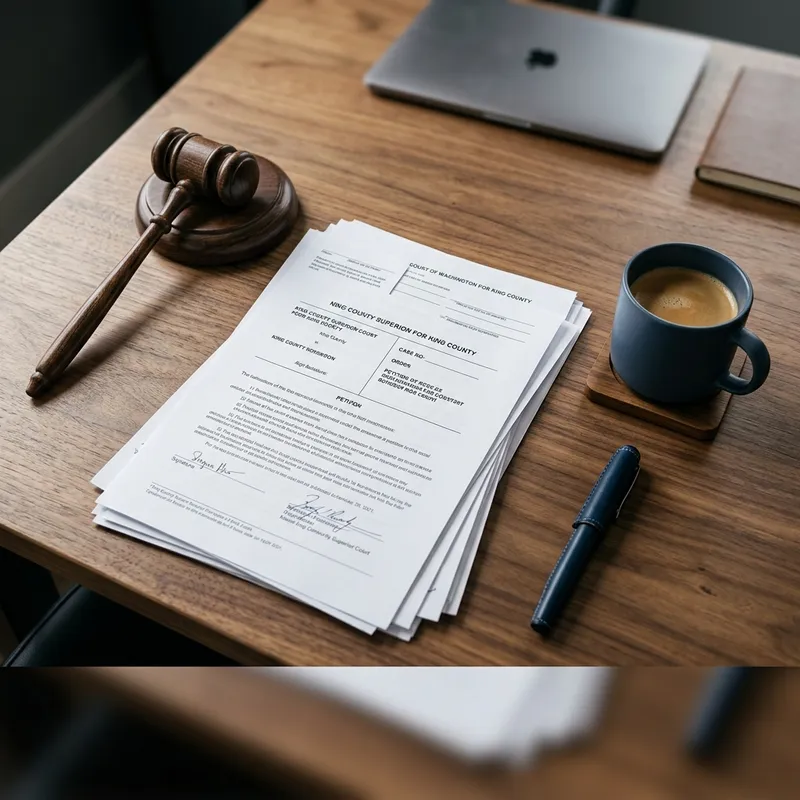
- Your case goes to Seattle OR Kent courthouse, determined by your residential ZIP code
- Washington's FL All Family form series handles all standard child support filings
- E-filing is available 24/7 and strongly recommended for efficiency
- If you receive public assistance, the Prosecuting Attorney's office may assist for free
- Uncontested cases typically resolve in 4–6 weeks; contested cases can take 3–6 months
Disclaimer: This is a procedural guide based on 2026 King County local rules. It is not legal advice. For complex situations, consult a licensed Washington family law attorney.
King County is Washington's largest judicial district, and its family court system is busy. If you've never navigated it before, knowing exactly what to expect, which building to go to, which forms to fill out, what the clerk will ask for, saves enormous time and frustration. Let's walk through it step by step.
| Item | Current Washington Standard |
|---|---|
| Self Support Reserve | $2,394 |
| Economic Table Limit | $50,000 |
| Minimum Support | $50 per child per month |
First, before you even think about the courthouse: complete your child support worksheet online or run your estimated support amount through our King County child support calculator. Walking into court with a realistic figure in hand puts you in a genuinely stronger position at every stage of this process.
1. Seattle or Kent? Which Courthouse Handles Your Case
King County's Superior Court operates across two main locations, and routing is determined by where the responding parent lives (typically the non-custodial parent), not where you live.
- King County Courthouse, Seattle: 516 Third Avenue, Seattle, WA 98104. This handles cases in north and central King County, including Seattle, Bellevue, Kirkland, Redmond, Mercer Island, and Renton.
- Maleng Regional Justice Center, Kent: 401 Fourth Avenue North, Kent, WA 98032. This handles south King County: Auburn, Federal Way, Kent, Enumclaw, Black Diamond, and similar areas.
If you're unsure which venue applies to your case, call the King County Superior Court Clerk at (206) 477-0400 or check the King County Superior Court website. Getting this wrong means your case gets transferred, which adds weeks to your timeline.
| King County Court | Location | Handles |
|---|---|---|
| Seattle Courthouse | 516 Third Ave | North/Central King County |
| Maleng Regional Justice Center | 401 Fourth Ave N, Kent | South King County |
2. The Forms You'll Need
Washington uses a standardized set of family law forms called the FL All Family series, most of which are free to download from the Washington Courts website. For a standard child support petition, you'll typically need:
- FL All Family 130, Petition for Child Support (the main filing document)
- FL All Family 131, Child Support Order (what the court signs)
- FL All Family 132, Child Support Worksheets (the income calculations, our Worksheet Wizard generates this automatically)
- FL All Family 101, Summons (notifies the other parent)
- King County Case Assignment Designation, a local form that routes your case to Seattle or Kent (find it on the King County court website)
If you're modifying an existing order rather than creating a new one, you'll use FL All Family 422 (Petition to Modify Child Support) and updated Worksheets. Make sure you're using the 2026 versions, forms are updated periodically and using an outdated version can cause your filing to be rejected.
3. Calculating and Filing Your Support Worksheets
The most common reason filings get sent back or delayed is incomplete or incorrect support worksheets. King County commissioners see hundreds of these and have little patience for math errors or missing income documentation.
Before you file, gather: your last two months of pay stubs, your most recent federal tax return (both forms W-2 and 1040), documentation of any self-employment income, proof of health insurance costs for the children, and any childcare invoices. The other parent's income information will eventually need to be exchanged through discovery if they don't voluntarily disclose it.
Use our Professional Worksheet Wizard to generate properly formatted support worksheets that match what King County courts expect. Print the output, sign it, and attach it to your petition.
4. Filing at the Clerk's Office (or E-Filing)
King County strongly encourages e-filing through the Washington Courts TurboCourt system. You can file 24 hours a day from home, pay filing fees by credit card, and get a confirmation immediately. The standard filing fee for a new family law case is $314, though this may be waived if you qualify for an In Forma Pauperis (IFP) fee waiver based on low income.
If you're filing in person, document windows at the Seattle courthouse are open Monday–Friday from 8:30 AM to 4:30 PM. Arrive early, the clerk's office can get backed up, and if you arrive after 4:00 PM they may not process same-day.
5. Serving the Other Parent
After you file, you must legally notify ("serve") the other parent. In King County, the most common methods are:
- King County Sheriff's process service, ~$85 fee; reliable and creates an official record
- Certified adult (not a party to the case) personal service, a friend, relative, or private process server physically hands the documents to the other parent
- Certified mail, the other parent must sign the return receipt personally
You'll receive a "Return of Service" form to file with the court proving the other parent was served. Without this, your case cannot move forward.
6. The Role of the Prosecuting Attorney's Office
If you currently receive TANF (public assistance) or Medicaid, the King County Prosecuting Attorney's Family Support Division will often open a child support case on your behalf automatically, working in coordination with DSHS. This service is free, though the state retains any support collected to offset public assistance costs.
If you don't receive public assistance but want agency help, DSHS's Division of Child Support (DCS) can also open a case, though they prioritize public-assistance cases and response times vary.
7. What Happens at Your First Court Date
For uncontested cases, where both parents agree on the support amount, you may be able to present a stipulated order and get it signed without a contested hearing. Commissioners approve these quickly if the worksheets are complete and the math checks out.
For contested cases, your first court date is typically a scheduling conference or an Order to Show Cause hearing. The commissioner will set deadlines for financial disclosure, issue temporary orders (which take effect immediately), and schedule a follow-up hearing if needed. Temporary orders are critical, they're the support amount that applies from the day they're issued until the final order, so getting them calculated correctly matters immediately.
8. Modifying an Existing King County Order
If you have an older support order and your income has changed by more than 15% under RCW 26.09.170, or two full years have passed, you can petition for a modification. The process is similar to the original filing but uses the FL 422 family of forms. If your combined income is now around $7,000/month, run a new estimate first so you know whether a modification is worth pursuing.
Related Reading
- King County Child Support Local Rules: The LFLR 10 Deep Dive
- 2026 WA State Guidelines: Complete Handbook
- WA Child Support Calculation: Step-by-Step Guide
Wrapping Up
Filing for child support in King County takes preparation, correct paperwork, and a clear understanding of which building your case belongs in. The process isn't fast, but going in with complete, accurate worksheets and the right forms significantly reduces delays. Take 10 minutes with our calculator now, that one step costs nothing, but it might save you from the most common mistakes families make in King County court.
Calculate Your Obligations
For official state resources and documentation, please visit the Washington DSHS or the Washington Courts homepage.
Calculate Your Exact Child Support
Free · 2026 RCW 26.19 Guidelines · All 39 Washington Counties
Keep Reading
Related Washington Child Support Guides
King County Child Support Rules: 2026 Local Guidelines Explained

2026 Washington State Child Support Guidelines: The Complete Handbook

Understanding the $2,394 Self-Support Reserve (SSR) in 2026
Frequently Asked Questions About Washington Child Support
Uncontested cases, where both parents agree, often resolve in 4 to 6 weeks. Contested cases requiring a hearing can take 3 to 6 months depending on how backed up the court calendar is. Temporary orders are usually issued at the first hearing, so support payments begin relatively quickly even in contested situations.
The standard filing fee for a new family law case is $314. If your income is below a certain threshold, you can apply for a fee waiver (In Forma Pauperis) by completing FL All Family 001. The clerk's office can give you the current waiver eligibility guidelines.
Calculate Your Exact Child Support
Get an immediate estimate based on the 2026 Washington State Economic Tables. Our tool accounts for the expanded $50,000 threshold and the $2,394 Self-Support Reserve.
Calculate Your Child SupportWSCSS Editorial & Legal Team
Our calculations and guides are rigorously audited by family law advocates and technical developers to ensure compliance with RCW 26.19 and the latest 2026 economic table updates. We maintain a strict editorial protocol based on official AOC mandatory forms and WAC guidelines.
Transparency Disclosure: WSCSS is an independent resource center. We are not a government agency or a law firm. Our calculations are provided for educational and estimation purposes based on the latest 2026 guidelines.
All WSCSS insights are reviewed for compliance with RCW 26.19.065 and official Washington State guidelines. Our team cross-references all data with official AOC publications.